when evaluating taiwanese cloud server vendors, regional coverage and number of nodes are the two key factors that affect user experience and service stability. these two indicators are directly related to latency, disaster recovery, and scalability, and are especially important for companies that want to optimize localized services.
regional coverage determines the access points and accessibility of cloud services in different cities or regions. wide coverage means users can access services from geographically closer nodes, thereby reducing network hops and latency, and improving page loading and application response speeds.
the number of nodes reflects the overall distribution density and load dispersion capabilities. more nodes can help balance traffic, shorten paths, and reduce the risk of single points of failure, but you also need to pay attention to the quality of network interconnection and the efficiency of synchronization between nodes.
in the taiwan market, data sovereignty and compliance requirements may require on-site storage or backup. regional coverage and the number of nodes not only affect latency, but also affect the location of data, backup strategies, and the feasibility of complying with regulations.
in addition to the number of nodes and geographic distribution, node connectivity, bandwidth capacity, availability zone design, and sla commitments should also be evaluated. the rankings should combine these quantitative and qualitative indicators to give a more informative ranking.
methods such as delay testing, route analysis, trial bandwidth and fault drills can be used during evaluation. combined with business traffic distribution and peak demand, determine whether the node distribution can meet the actual load and disaster recovery requirements.
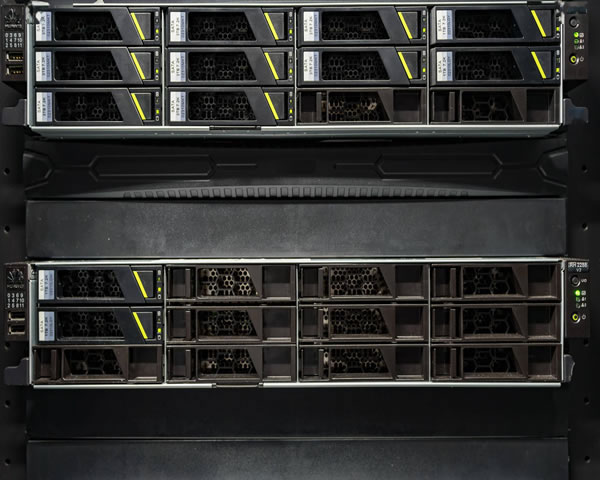
low-latency applications (such as real-time communications or financial transactions) should give priority to vendors with dense nodes and local coverage; for static content or distributed services, the number of nodes and cdn integration capabilities should be weighed to reduce costs.
taken together, regional coverage and number of nodes occupy a core position in taiwan's cloud server vendor rankings. it is recommended that enterprises conduct multi-dimensional comparisons based on actual business scenarios, combining latency testing, compliance requirements and sla terms, and give priority to manufacturers with good local coverage and high-quality network interconnection.
- Latest articles
- Popular tags
-

Purchase List: Where To Buy Taiwan Cloud Servers? Choose Hardware Specifications Based On The Type Of Business
Guide: Explain where to purchase Taiwan-based cloud servers from a procurement checklist perspective, and select hardware specifications such as CPU, memory, storage, and network based on the type of business, including channels, SLAs, and compliance considerations. -

Bandwidth And Latency Considerations In Multi-region Deployment Of Taiwan’s Distributed Server Cloud Space
discuss the key points of bandwidth planning and delay control when taiwan's distributed server cloud space is deployed in multiple regions, covering network topology, measurement methods, traffic scheduling and optimization practices, and provide actionable suggestions. -

Comparison And Recommendation Of Taiwanese Server Brand Cloud Hosts
compare cloud hosts of taiwanese server brands in detail, analyze performance, stability and cost-effectiveness to help users choose the most suitable cloud host.